

 Admin
AdminGetting your PCO license in 2026 is an exciting step toward a flexible, high-earning career on the streets of London. But before you can start picking up passengers for Uber or Bolt, there is one major hurdle you have to clear: the SERU (Safety, Equality, and Regulatory Understanding) assessment.
Many drivers walk into the exam room thinking it’s a simple English test or a "common sense" quiz. Unfortunately, that’s exactly why the failure rate is higher than most expect. The SERU test isn't just about whether you can speak English; it’s about whether you understand the TfL PHV Driver Handbook inside and out.
If you are feeling nervous about your upcoming test, don't worry. At PCO GO, we have helped thousands of drivers navigate the TfL maze. We have seen exactly where candidates stumble. In this guide, we are going to break down the most common SERU test mistakes and, more importantly, show you how to avoid them.
1. The "Open-Book" Trap: Assuming You Don't Need to Study
The SERU assessment is technically "open-book," meaning you have access to the PHV Driver Handbook during the exam. Because of this, many drivers make the fatal mistake of thinking they don't need to revise beforehand.
The Reality: You only have 45 minutes to answer 37 questions. If you spend 3 or 4 minutes searching for every single answer in a 100-page document, you will run out of time before you’re even halfway through.
Insider Tip: Use the handbook as a safety net, not a primary source. You should know the core rules, like safeguarding, equality, and passenger safety, well enough to answer them without looking. Only use the handbook to double-check specific wording or complex regulations.
2. Poor Navigation: Not Knowing the "Geography" of the Handbook
When you do need to look something up, speed is everything. A common mistake is not knowing which section of the handbook contains which information.
The TfL handbook is divided into clear sections:
- Section 1-3: Licensing and PHV laws.
- Section 4-6: Safety, safeguarding, and reporting crimes.
- Section 7-9: Equality, disability awareness, and customer service.
- Section 10: Road safety and the environment.
If a question asks about "Assistance Dogs," do you know that’s in the Equality section? If it asks about "Reporting a Crime," do you know to head to the Safety section?

How to Fix It: At PCO GO, our computer-based training teaches you how to navigate digital versions of the handbook quickly. We recommend skimming the table of contents until you can practically recite which topics belong in which chapter.
3. The "Synonym" Slip-Up: Missing the Exact Wording
The SERU test includes "complete the sentence" questions where you must drag and drop the correct word into a gap. Many drivers lose marks here because they choose a word that means the same thing but isn't the exact word used in the handbook.
For example, if the handbook says, "You must ensure the passenger is safe," and the options are "ensure," "make sure," and "guarantee," only "ensure" will be marked correct.
The Fix: You must pay attention to the specific vocabulary TfL uses. This is why reading the handbook, not just summaries, is vital. If you want to see how this works in practice, check out our guide on 7 mistakes you're making with your SERU prep.
4. Confusing "Must" with "May" (and "Should")
TfL is very particular about legal obligations versus recommendations. This is one of the most frequent areas where candidates lose easy marks.
- MUST: This is a legal requirement. If you don't do it, you are breaking the law or licensing rules (e.g., "You must carry your PHV driver's badge at all times while working").
- MAY: This is something you are allowed to do but aren't forced to do.
- SHOULD: This is best practice, but not necessarily a strict law.
Questions will often try to trick you by swapping these words. Always look for the modal verb (must, may, should) in the question and match it to the handbook.
5. Answering Based on "App Policy" Instead of TfL Rules
Many of our students are already familiar with how Uber or Bolt works. However, those companies have their own policies that might differ slightly from TfL’s official regulations.
The Mistake: Answering a question based on "what I do on the Uber app" rather than what is written in the PHV Driver Handbook.
Remember: The SERU test is set by TfL, not by an operator. If the handbook says one thing and your app says another, always go with the handbook answer.

6. Underestimating the "Safety and Safeguarding" Sections
In 2026, TfL has placed a massive emphasis on passenger safety, specifically regarding safeguarding children and vulnerable adults.
Common errors include:
- Not knowing how to spot signs of "county lines" exploitation.
- Failing to understand the correct procedure for reporting a passenger's suspicious behavior.
- Misunderstanding the rules around carrying children in private hire vehicles (e.g., child seat exemptions).
These sections carry a lot of weight. If you haven't reviewed the Safeguarding Awareness content, you are at high risk of failing the most important part of the test.
7. Poor Time Management: The "Stuck" Syndrome
With only 45 minutes, you cannot afford to get "stuck" on a difficult question. We see many drivers spend 10 minutes trying to find the answer to one tricky multiple-choice question, leaving them with only seconds to finish the final 10 questions.
The PCO GO Strategy:
- Answer the questions you know immediately.
- Flag the ones you aren't sure about.
- Finish the easy ones first to "bank" those marks.
- Use the remaining time to look up the "flagged" questions in the handbook.
How PCO GO Makes the Difference
Preparing for the SERU test on your own can be overwhelming. The handbook is long, the wording is technical, and the pressure is high. That’s why we offer specialized SERU test prep designed to mimic the real exam environment.
What we offer:
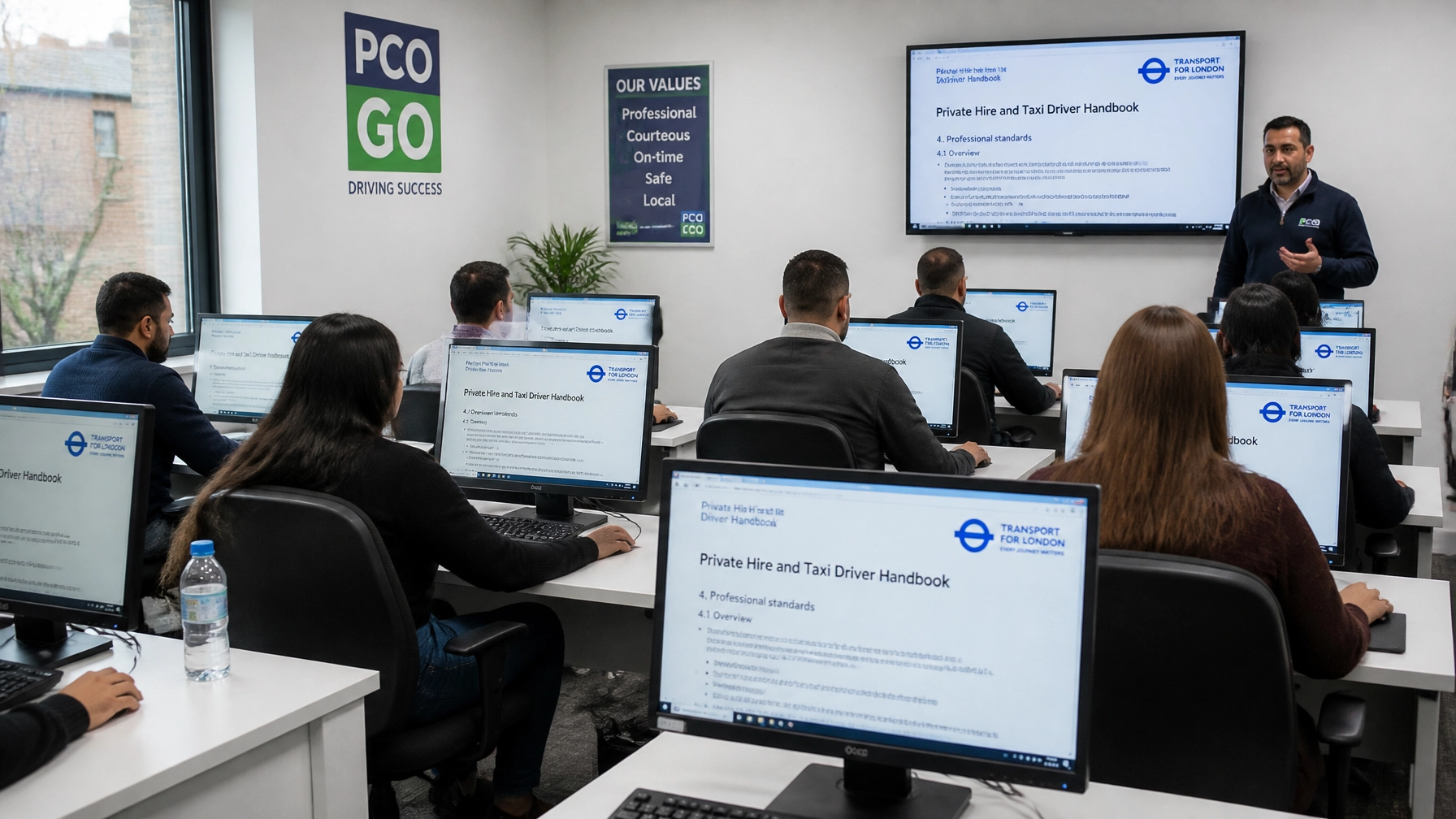
- Computer-Based Training: Don't practice on paper when the real test is on a PC. Our workstations use software that looks and feels like the real TfL assessment.
- Real Exam Mocks: We provide practice tests that cover the exact topics you'll face on the day.
- Expert Trainers: Our team knows the common "trick" questions and will coach you on how to spot them.
- Comprehensive Support: From your initial PCO license application to passing your topographical and SERU tests, we hold your hand through the entire process.

Your SERU Test Day Checklist
Before you head to your assessment, make sure you've done the following:
- Read the PHV Driver Handbook at least twice.
- Taken at least 3 timed mock exams.
- Memorized the location of key topics in the handbook sections.
- Understood the difference between Must, May, and Should.
- Confirmed your booking time and location (check your emails from TfL!).
Frequently Asked Questions (FAQ)
What is the pass mark for the SERU test?
To pass the SERU assessment, you generally need to achieve a score of at least 60%, though it is always best to aim for 80% or higher during your practice mocks to ensure a safety margin.
Can I retake the SERU test if I fail?
Yes, if you do not pass on your first attempt, you will be offered a second opportunity. However, failing twice may result in your license application being refused, meaning you would have to start the entire process again.
Is the SERU test the same as the English Language Requirement (ELR)?
No. While the SERU test checks your ability to read and write in English, it is specifically focused on safety and regulations. You may still need to provide separate proof of your English language skills (like a SELT certificate) depending on your circumstances.
How much does SERU training cost at PCO GO?
We offer various packages to suit your needs, including combined topographical map training and SERU prep. Our map training starts at just £99, providing excellent value for drivers looking to pass the first time.
Where do I take the actual test?
The official SERU assessment is conducted at TfL’s driver assessment centres, usually in Baker Street or West Kensington. You will receive an invitation with the specific time and place.
Conclusion
The SERU test is not impossible, but it is specific. By avoiding these common mistakes: like winging it without study or confusing "must" with "should": you put yourself in the best position to pass.
Ready to get your license and start earning? Don’t leave your career to chance. Book your training session with PCO GO today and let our experts help you pass with confidence.